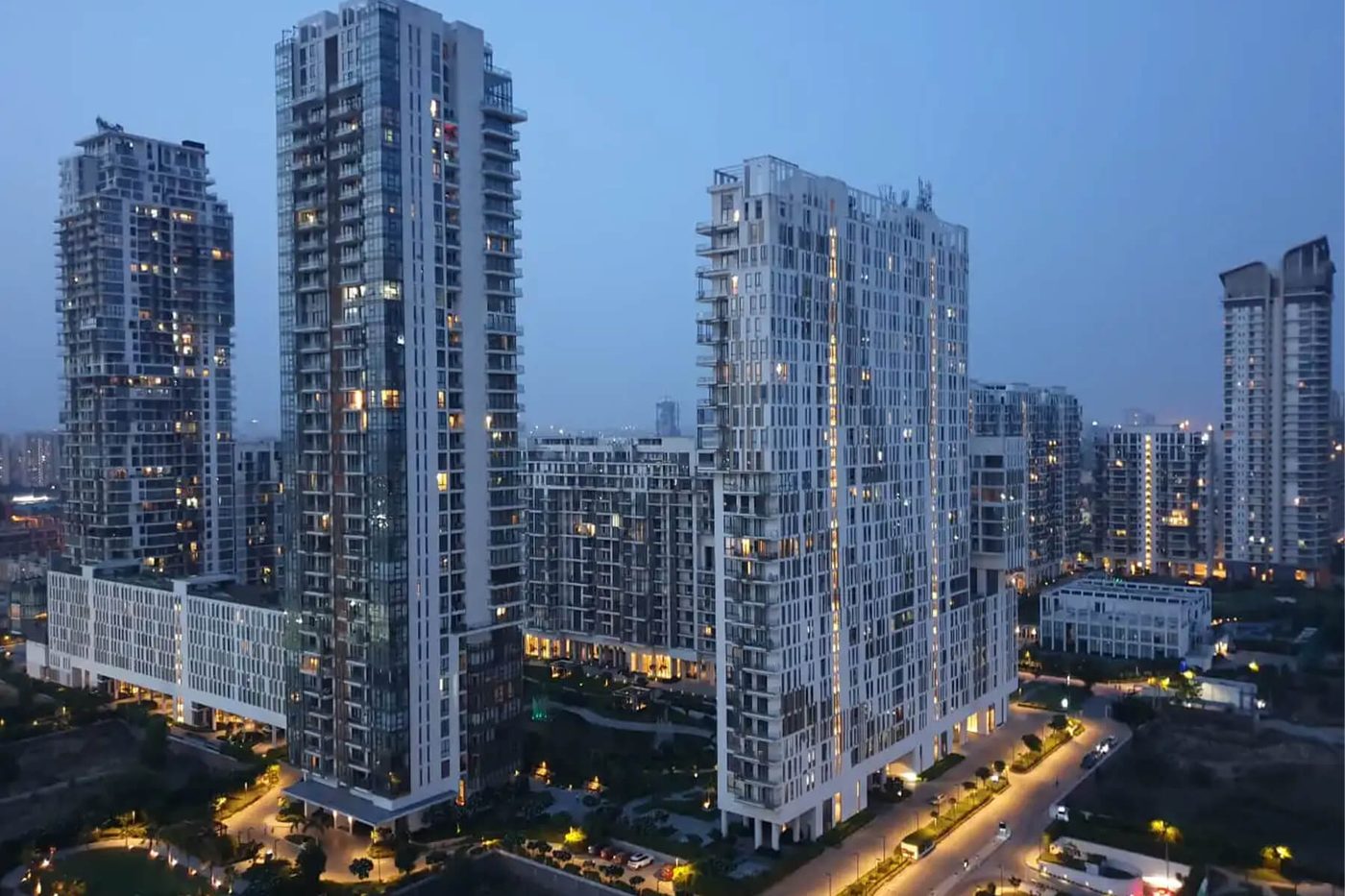
A single price per square foot tells you very little about Gurugram. Golf Course Road, Dwarka Expressway, Sohna Road and the Southern Peripheral Road behave like different cities that happen to share a name. They differ in who lives there, how easily a home resells, how much new supply is coming and how daily life actually feels. When we meet buyers who are comparing projects, our first suggestion is almost always the same: compare the corridors first, and the projects second.
What follows is the method we use. It is deliberately simple, because a method you will actually use beats a sophisticated one you will not.
A good project in a weak micro-market is a harder purchase than an average project in a strong one.
1. Who actually lives there?
Look past the brochure and ask who occupies the homes today. A corridor dominated by end-users who have lived there for years behaves very differently from one where most units are held by investors waiting to exit. End-user markets tend to be steadier, because people who live in their homes do not sell on a headline. Investor-heavy markets can move faster in both directions.
How do you find out? Visit on a weekday evening and count the lit windows. Speak to the guard, the security staff and the shopkeepers. Ask the society's management how many flats are rented and how many are owner-occupied. A few honest answers beat a page of data.
2. What is already built, and what is only promised?
Roads, metro links, schools, hospitals and daily retail are the real infrastructure of a neighbourhood. Separate what exists from what is announced. Announced infrastructure can be priced in long before it arrives, and timelines move. Give more weight to what you can drive to, walk to and use this month.
A useful exercise is to write two columns: "working today" and "promised". Be strict about what goes in the first column. A school that is under construction belongs in the second. See Dwarka Expressway: buying along a corridor still taking shape for how this plays out on a corridor that is still maturing.
3. How deep is the resale market?
Ask how many comparable homes changed hands in the last year, and at what spread between asking and closing price. A corridor where resale is active gives you a credible exit. A corridor where resale listings sit for long periods is telling you something the launch price list will not.
Ask a few brokers who are not trying to sell you something. Ask for actual closing prices on recent deals, not for the highest number they can remember. If nobody can name a recent deal, treat the corridor as illiquid.
4. How much supply is coming?
A corridor with limited remaining land and a thin pipeline supports prices in a way that a corridor with large, repeated launches does not. Look at approved and announced supply, not only what is open for booking today. Heavy upcoming supply gives buyers more choice and more bargaining power, and it can slow rent growth.
For an investor, this question can matter more than any other. The five numbers include vacancy and exit for exactly this reason.
5. Does the micro-market match your purpose?
Buying to live, to rent out or to hold for appreciation are three different goals. A mature, expensive address can be the right answer for someone who wants certainty and liquidity. A newer corridor can suit someone who accepts more risk for more potential growth. Be honest about which of these you are, because the best corridor changes with the answer. Rental yield or appreciation helps you set the goal first.
Using the five questions in practice
Write the questions on a page and score two or three corridors against them. Do not give marks out of ten. Use three words: strong, mixed or weak. Then visit each corridor at different times of day, on a weekday and on a weekend. The numbers shortlist the options. The visit tells you whether you would want to be there.
We find it useful to compare corridors that sit near each other and appeal to similar buyers. Golf Course Road and Golf Course Extension Road is a good example of two names that suggest the same thing and deliver different experiences. Sohna Road and the Southern Peripheral Road show how connectivity and congestion can arrive together. New Gurgaon shows how "new" can be an advantage or a risk.
Common mistakes
- Treating a corridor as one market. A sector at the edge and a sector inside the same corridor can differ greatly.
- Believing the announcement. Announced is not built.
- Using asking prices as evidence. Closing prices are what matter.
- Looking only at the day of the visit. Return at peak hours.
Our view
You will not predict where Gurugram goes next, and nobody else can either. What you can do is choose a micro-market where your own plan survives a disappointing outcome. That is a better test than any forecast. For what comes after the shortlist, see our pre-booking checklist.
This article is general guidance, not an offer or a recommendation for a specific property. Speak to an advisor for a view that fits your situation, through our contact page.